Decomposition, Soil & Nutrient Availability · Grade 7 Science
Chapter: Ecosystems, Matter & EnergyDecomposition, Soil & Nutrient Availability
Learning goals
- I can explain decomposition, soil & nutrient availability.
- I can use evidence, a model, and stated assumptions to support a biological explanation.
Before this unit
Use the supplied vocabulary, distinguish an observation from an explanation, and identify any units or model assumptions. Revisit a connected earlier unit if needed; new terms are explained here.
Use three flexible 40–45-minute sessions: core background and Parts 1–2 with their checks; Parts 3–4 and the worked application; then remaining practice, a labeled model, revision, and the exit check. Checks completed during reading can count toward the practice set. Read one short part at a time. Investigations and chapter review/quiz have separate sessions, and flexible weeks allow more time.
A fallen leaf disappears within a year in a warm damp wood and can still be recognisable after a decade in a cold dry one. Nothing about the leaf differs; the conditions do. Decomposition is a biological process carried out by living organisms, so anything that affects those organisms affects the rate — and that is the key to this unit, because it explains both why tropical soils and arctic soils behave so differently and why a compost heap works faster when you turn it.
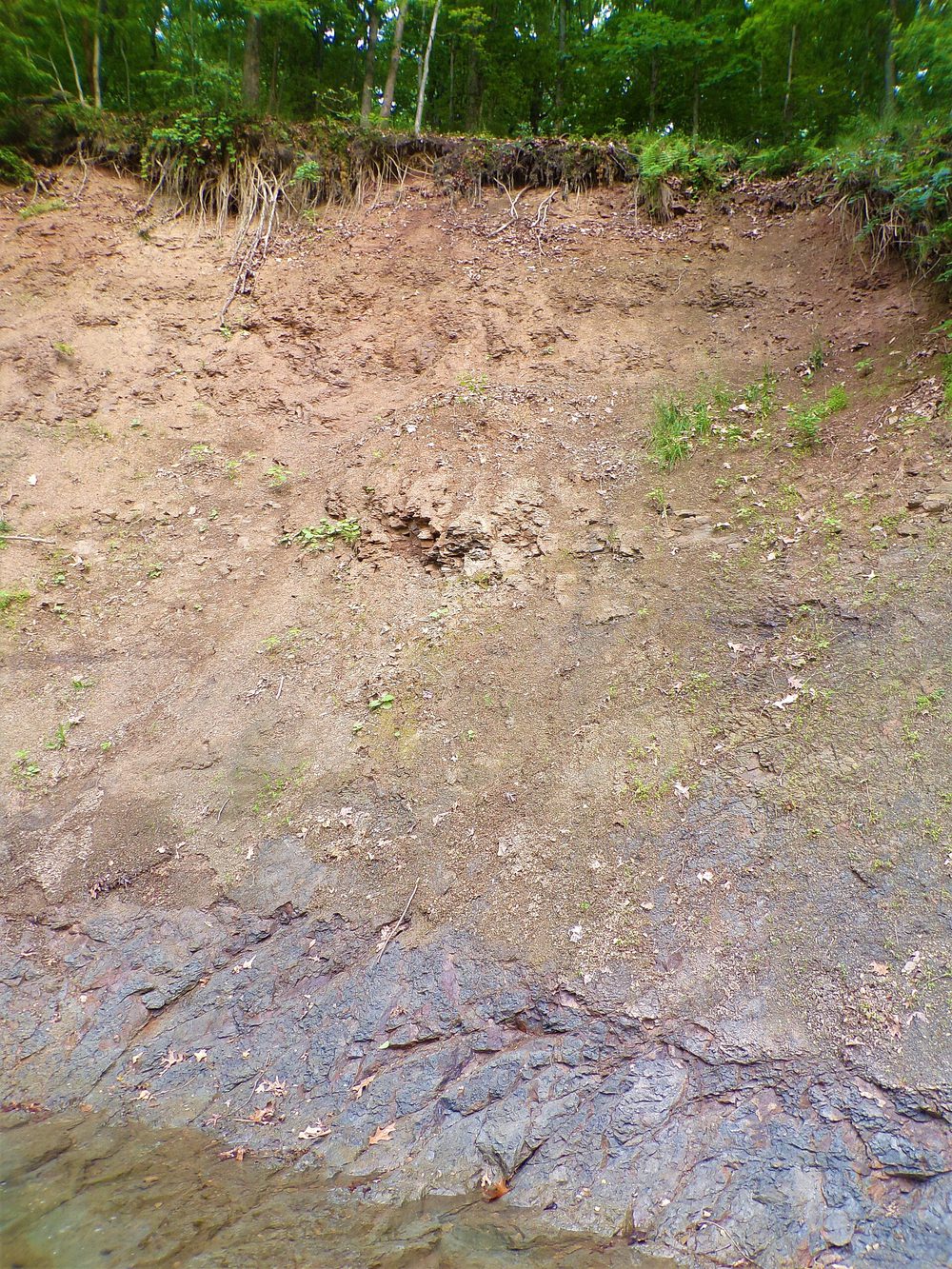
Soil is not simply dirt. It is a mixture of four things: mineral particles broken down from rock, organic matter from decomposed organisms, water, and air held in the spaces between particles. That last component is easy to forget and is essential, because roots and soil organisms respire and need oxygen. The pore space between particles holds both the water and the air, and its size and arrangement determine how much water drains away, how much is held where roots can reach it, and whether oxygen can get in.
Decomposition is the breakdown of dead material and waste by fungi, bacteria and small animals, and from their point of view it is simply feeding — they are consumers obtaining energy from material that was recently alive. What makes it matter to everything else is the by-product: as they break material down, they release nutrients in forms producers can take up through their roots. When you measure decomposition you usually measure dry mass, the mass with the water driven off, because water content varies from day to day and would otherwise swamp the signal you are looking for.
Build your understanding
Where this fits
The last unit named decomposition as the return path that completes a cycle and left it at that. This unit opens it up, because decomposition happens in soil and soil is where the matter cycle meets the resources plants actually draw on — which is also where the next chapter's questions about land and human impact begin.
Use three flexible 40–45-minute sessions: core background and Parts 1–2 with their checks; Parts 3–4 and the worked application; then remaining practice, a labeled model, revision, and the exit check. Checks completed during reading can count toward the practice set. Read one short part at a time. Investigations and chapter review/quiz have separate sessions, and flexible weeks allow more time.
Part 1 · What soil is made of
The mineral fraction comes from rock broken down physically and chemically over long periods, and the size of those particles sets much of a soil's behaviour. Sand particles are large, so the pores between them are large, water drains quickly and air gets in easily. Clay particles are tiny, the pores are tiny, water is held tightly and air is scarce. Most useful soils are mixtures.
The organic fraction comes from decomposed organisms. It holds water, supplies nutrients as it continues to break down, and binds mineral particles into crumbs with spaces between them — so adding organic matter improves both water holding and air supply, which is why compost helps sandy and clay soils for different reasons.
Water and air share the pore space and compete for it. A waterlogged soil has no air, so roots and soil organisms cannot respire, and decomposition slows or shifts to organisms that manage without oxygen. A bone-dry soil has plenty of air and no water for the organisms to live in. Good soil structure is the arrangement that holds enough of both.
Pause and explain
Why does a waterlogged soil cause problems for plants even though plants need water?
Check your reasoning after answering
Because water and air share the pore space, and waterlogging fills it with water. Roots and soil organisms respire and need oxygen, so with no air in the pores they cannot release the energy they need. Decomposition also slows or shifts to organisms that work without oxygen, which changes what nutrients become available.
Part 2 · Decomposers as consumers with a useful by-product
From the decomposer's side, dead material is food. Fungi and bacteria secrete enzymes onto it, break large molecules into small ones, absorb those, and respire them for energy — the same chemistry as any other consumer, run outside the body rather than in a gut. Small animals such as worms and springtails contribute by fragmenting material, increasing the surface area available, which is the same principle as chewing from the digestion unit.
The consequence for everything else is release. Carbon returns to the air as carbon dioxide from the decomposers' respiration, and nitrogen, phosphorus and other nutrients are released into the soil in forms roots can absorb. Producers depend on this entirely: the nutrients in a growing plant were, for the most part, in a dead organism not long before.
So decomposition is both an energy story and a matter story, and keeping them apart is the habit this chapter keeps returning to. The energy in dead material passes to decomposers and leaves the system as heat, following the one-way rule. The matter returns to the soil and air and is used again, following the cycling rule.
Pause and explain
In what sense are decomposers consumers?
Check your reasoning after answering
They obtain their energy from material that was recently alive, which is the definition of a consumer. The difference is where the digestion happens: fungi and bacteria secrete enzymes onto the material and absorb the small molecules, rather than taking food into a gut. Their by-product is the release of carbon and nutrients in forms producers can use.
Part 3 · Comparing decomposition rates fairly
Because decomposition is carried out by organisms, its rate responds to temperature, moisture, oxygen and the nature of the material. A fair comparison therefore holds all but one of these constant, which is the method from Chapter 1 applied to a tray of litter.
Measure it as a loss of dry mass over a stated interval. Take matched samples, dry them to constant mass at the start, expose them to the treatments, dry them again at the end, and compare. Drying matters: a sample that simply absorbed water would appear to have gained mass, and one that dried out would appear to have decomposed.
Work the model. Two matched samples each start at 20 g of dry material; after the same interval, A ends at 14 g and B at 18 g, with moisture as the treatment and other conditions stated matched. A lost 6 g and B lost 2 g, so A lost 4 g more. That is a clear difference, and attributing it to moisture is reasonable given matched conditions — though the measurement is of mass lost, not of decomposition directly, which the final section takes up.
Pause and explain
Two matched 20 g samples end at 14 g and 18 g. What were the losses, and what does the comparison support?
Check your reasoning after answering
A lost 20 − 14 = 6 g and B lost 20 − 18 = 2 g, so A lost 4 g more over the same interval. With other conditions stated as matched and moisture as the treatment, the comparison supports moisture affecting the rate of mass loss under these conditions — a narrower claim than moisture causing decomposition in general.
Part 4 · What the boundary leaves out, and the trade-off
Mass loss from a sample is not quite the same as decomposition, and the gap is worth naming. Material can leave a sample by being washed out, by being carried off by an animal, or by physical crumbling, none of which is biological breakdown. A careful study states its boundary: what was inside the sample, what could cross out of it, and which routes were prevented.
There is also a trade-off in soil management that this unit sets up for the next chapter. Fast decomposition releases nutrients quickly, which plants can use, but it also depletes the store of organic matter that holds water and structure. Slow decomposition builds that store and keeps nutrients locked up. Neither is simply better, and which is preferable depends on what the soil is for.
That is the honest shape of most environmental questions, and the design unit in the next chapter makes it explicit: options have criteria they meet and costs they carry, and choosing between them means stating both rather than declaring one correct.
Pause and explain
Why is mass loss from a sample not exactly the same as decomposition?
Check your reasoning after answering
Because material can leave a sample by routes that are not biological breakdown — washed out by water, carried off by an animal, or physically crumbled away. A careful comparison states the boundary: what was in the sample, which routes out were possible, and which were prevented, so the loss can be attributed to decomposition rather than assumed.
Apply the whole unit · Compare decomposition records
Illustrative dry-material study over one interval, not measured data: matched samples each start at 20 g. Sample A ends at 14 g and sample B at 18 g. The moisture treatment differs between them; all other conditions are stated as matched.
Your task
Calculate the mass loss for each sample, state the pattern the comparison supports, and name a limitation arising from the boundary.
What your response should show
- Explain the relevant biological process accurately.
- Use the supplied evidence and show calculation steps with units where needed.
- Connect a labeled model or mechanism with the claim.
- State an assumption, evidence limitation, or useful next observation.
Response guidance — after your attempt
Calculate A's loss: 20 g − 14 g = 6 g.
Calculate B's loss: 20 g − 18 g = 2 g.
Compare: A lost 4 g more than B over the same interval, which is three times as much.
State the boundary limitation: mass could leave a sample by washing out, physical crumbling or removal by animals, so the measurement is of mass lost rather than of decomposition directly.
Sample A lost 20 − 14 = 6 g and sample B lost 20 − 18 = 2 g, so A lost 4 g more over the same interval — three times B's loss. Because the samples started matched at 20 g of dry material and all conditions other than moisture are stated as matched, the comparison is structured to attribute that difference to the moisture treatment, which is more than most informal comparisons manage. The supported claim is that under these conditions, over this interval, the wetter treatment was associated with three times the dry-mass loss. Using dry mass is deliberate and worth noting: a sample weighed wet could appear to gain mass simply by absorbing water, or appear to decompose by drying out, so drying to constant mass at both ends is what makes the figures comparable at all. The boundary limitation is that mass loss and decomposition are not the same quantity. Material can leave a sample by being washed out in solution, by crumbling physically, or by being carried off by an animal, and none of those is biological breakdown — yet all of them would show up as mass lost. A stronger study would state which routes out were possible and which were prevented, for instance by enclosing the samples in mesh fine enough to exclude larger animals while admitting water and microorganisms, and would ideally measure carbon dioxide released as a direct signal of decomposer respiration. Two samples run once is also a small study, so repetition would be needed before treating the threefold difference as reliable.
Scientific references for this unit
Parent / teacher teaching notes
Ask for a because-statement and a labeled relationship, not just a memorized word. Work through one calculation step at a time, permit oral or diagram responses, and use flexible sessions for difficult reading. Compare the learner’s actual evidence with the supplied model; do not reward copying or agreement with a personal preference. No private family, genetic, or medical records are required.
The key idea
Soil is a changing mixture of mineral particles, organic material, water, air spaces, and organisms. Dead leaves are not simply converted into new plants. Decomposers process organic material, release energy through their own metabolism, and move nutrients into forms that can enter other pathways. Plants need suitable resources as well as an energy source.
Worked examples
Example 1 · Explain a rate difference from conditions
- Identify who does the work: fungi, bacteria and small animals, all living organisms with their own requirements.
- Apply temperature: their enzymes and respiration work faster in warmth, within limits, so cold slows everything they do.
- Apply moisture: these organisms need water to live and to move; a dry environment limits both their activity and their numbers.
When a biological rate changes, ask what changed for the organisms doing the work.
Example 2 · Improve a study's boundary
- List routes out that are not decomposition: soluble material washed out by rain, fragments blown or crumbled away, material removed by animals or birds.
- Ask whether the treatment could affect those routes rather than decomposition — a wetter tray loses more to washing out as well as decomposing faster.
- Propose a design change that closes or equalises the non-biological routes.
Ask what else could remove mass. The measurement is of mass, not of the process you are interested in.
Avoid these mistakes
- Mistake: soil is just dirt. It is mineral particles, organic matter, water and air, and the air in the pore space is essential because roots and soil organisms respire.
- Mistake: decomposers are not consumers. They obtain energy from material that was recently alive, digesting it outside their bodies; their useful by-product is releasing nutrients for producers.
- Mistake: mass loss measures decomposition. Material also leaves by washing out, crumbling and removal by animals, so the boundary and the routes out have to be stated.
- Mistake: faster decomposition is simply better. It releases nutrients quickly and depletes the organic matter that holds water and structure, which is a trade-off rather than an improvement.
Check your understanding
Why are spaces in soil relevant?
Discuss the answer
They can hold air and water and affect movement and root conditions, rather than being biologically meaningless empty areas.
Do decomposers return usable energy as sunlight?
Discuss the answer
No. They change matter pathways while energy transfers through metabolism and heat; continued energy input is still needed.
Words to know
- soil
- A mixture of mineral particles, organic matter, water and air; the air in the pores is as essential as the water.
- nutrient
- A substance a plant takes up through its roots, released into the soil largely by decomposers breaking down dead material.
- decomposition
- Breakdown of dead material by fungi, bacteria and small animals feeding on it, which returns carbon to the air and nutrients to the soil.
- pore space
- The spaces between soil particles, shared by water and air; its size determines drainage, water holding and oxygen supply.
- dry mass
- Mass with the water driven off, used because water content varies daily and would otherwise swamp the change being measured.
Extend your scientific explanation
Compare a second supplied example or the linked educational reference. Identify a connection, a model limit, and an additional observation that would test the explanation.
In the real world
Use a clear question, reliable observations, and a biological mechanism to evaluate a claim. State what remains uncertain before applying a classroom model to a different setting.
Exit check
Why is “more water always improves soil conditions” unsupported?
Check your explanation after answering
Water can occupy air spaces and interact with other conditions; the effect depends on the organism and setting.
Explain your reasoning without notes. If a key idea is missing, revisit the lesson and try again.