How the World Got Wired
Chapter 19 — A Naval Office in Arlington
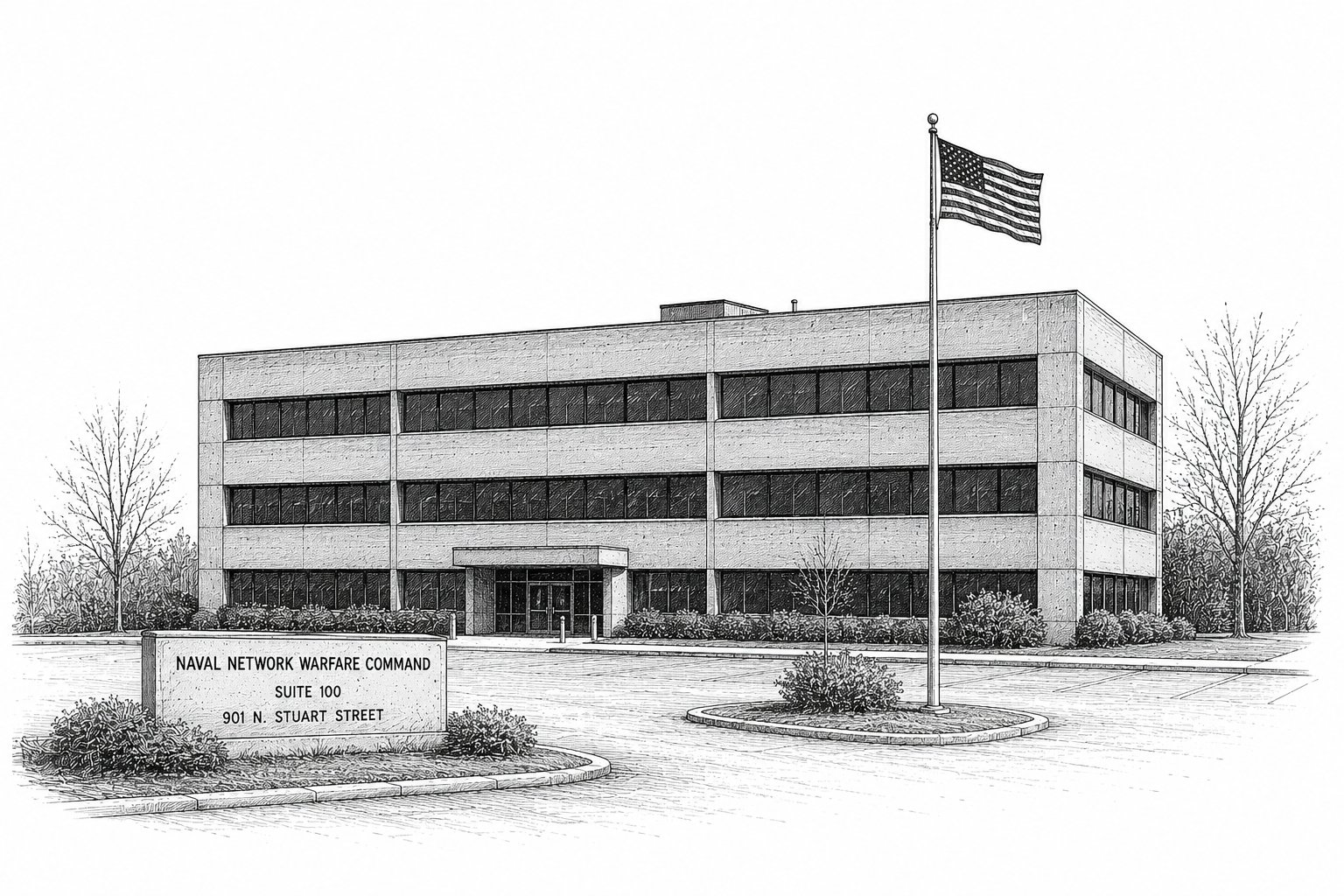
There is a building in Arlington, Virginia — just across the Potomac River from Washington, D.C. — that looks like every other office building in that part of the country. It is plain. It is gray. It has security at the door and no signs along the street explaining what happens inside. If you walked past it, you would assume it was some mid-level federal agency, of the sort that handles paperwork. You would be mostly right.
Inside this building, since 1946, there has been an office of the United States Navy.
The office is not concerned with ships, or with sailors, or with weapons, or with anything you would recognize as Navy business. It is concerned with science. Its job, almost from the day it was founded, has been to find scientists in universities across the country who are working on hard, important, basic problems, and to give them money.
The office is called the Office of Naval Research, or ONR for short. It is one of the most quietly important institutions in the history of American science. Almost no one outside the research community has heard of it. It has been continuously funding basic research, in fields ranging from oceanography to materials chemistry to artificial intelligence, for nearly eighty years.
A surprising amount of the science behind the artificial intelligence revolution you are growing up inside started, in a financial sense, in that gray building.
This chapter is about why.
After the War
To understand the Office of Naval Research, you have to understand 1945.
The Second World War, which had just ended, had been the most scientific war in human history. The most important weapons of the war had not been guns or tanks. They had been inventions. The atomic bomb. Radar. The proximity fuse. Penicillin. The Enigma code-breaking machines. The jet engine. Each one of those had been built, during the war years, by scientists — most of them civilians, most of them academics — who had been pulled out of their universities and given enormous budgets and told: figure this out, as fast as possible, however you can.
You read about one of those scientists in Chapter 1. Vannevar Bush, who ran the most important American science office of the war, and who, when the war ended, was tired and worried and wrote an essay about a machine called the memex.
Bush had also written, in 1945, a much more important document. It was called Science: The Endless Frontier, and it was a long letter to President Roosevelt arguing that the United States should keep doing in peacetime what it had done in wartime: pay scientists to do basic research, and trust them to choose the problems. Bush argued that science — pure, curiosity-driven science, the kind that has no immediate application — was the long-term source of every important industrial and military breakthrough. A country that paid for it would, in the long run, lead the world. A country that didn’t would, in the long run, fall behind.
Many people in Washington agreed. The question was who would do the paying.
The civilian science agency — the National Science Foundation, or NSF — would not be created until 1950. There was a gap. Several years where the country had decided it needed to keep funding basic science, but had not yet built the machinery to do so.
Into that gap stepped the United States Navy.
In August of 1946, just a year after the war ended, Congress passed a law creating the Office of Naval Research. The Navy got the official mission of supporting “scientific research in recognition of its paramount importance as related to the maintenance of future naval power, and the preservation of national security.” That was the official language. The actual practice was somewhat broader.
The way ONR worked, almost from the beginning, was this. It had a small staff of program officers — scientists in different fields, hired by the Navy, given budgets. The program officers’ job was to find, in universities around the country, the most interesting work being done in their area, and to write checks. The checks were called contracts or grants. They typically ran for several years. The scientists who received them did not have to work on Navy projects. They had to work on what they were already working on. The Navy just paid for it.
This was unusual. Most government agencies, when they hire someone, tell that person what to do. ONR didn’t. ONR’s bet was that if you found the best people, and let them follow their own ideas, the results would, in the long run, benefit the Navy — and the country — in ways that nobody, including ONR, could predict in advance.
That bet has, over almost eighty years, paid off in ways that would have astonished the people who originally placed it.
All 24 chapters of How the World Got Wired · Library · All courses