Balanced & Unbalanced Forces · Grade 8 Science
Chapter: ForcesBalanced & Unbalanced Forces
Learning goals
- I can find the net force on an object from two or more forces.
- I can predict whether an object's motion will change based on whether forces are balanced or unbalanced.
Readings for this unit
Before this unit
Add forces with direction and distinguish force from motion.
Use three teaching sessions of about 40–45 minutes: first observe the phenomenon, draft a model and study Parts 1–2; next explain Parts 3–4 with the figures and evidence; then work the application, examples, practice, model revision and exit check. Divide any difficult part into smaller steps and revisit after feedback. Investigations, review and quizzes have separate sessions. Study the four visual parts across the scheduled sessions, then use the illustrated worked case and independent transfer questions. Extend or revisit a session when the learner cannot explain the figure; completion time is a proposed allocation, not a mastery guarantee.
Start with something to explain
What would explain the observations in balanced & unbalanced forces?
Illustrative evidence case. A supplied cart moves right steadily while forces are 5 N right and 5 N left. A later interval has 7 N right and 3 N left.
Notice and wonder
Could the top cart be moving right? Write two observations from the supplied record without guessing their cause. Include a quantity and its unit when given. An observation is what was recorded; an inference is what you think explains it.
Write one question about why the pattern occurs and one question about a comparison that could distinguish competing explanations. A testable question identifies what could be observed or measured.
Your first model
Before reading the model answer, sketch the named objects or particles and label what you think changes. Find the horizontal net force in both intervals and explain which interval changes velocity. Distinguish force from motion direction. Keep this first version so you can compare it with your later explanation.
Build the language from the idea
- net force
- The overall force on an object after combining all individual forces, accounting for direction.
- balanced forces
- Forces that combine to a net force of zero, so motion doesn't change.
- unbalanced forces
- Forces that combine to a net force that isn't zero, causing acceleration.
- model
- A representation that explains selected features and makes predictions; it leaves other details out.
- evidence
- Relevant observations or records used to support or challenge a claim.
- system boundary
- The chosen limit separating the objects being studied from their surroundings.
- assumption
- A condition taken as true for a model or calculation and needing to be checked against the case.
In the real world, objects almost never feel just a single force. Right now, gravity is pulling this book down, the table is pushing it up, and if you slid it, friction would drag against it too. What actually determines how an object moves isn't any one of those forces alone, but the net force — the single overall force you get after combining all of them, carefully accounting for direction. Forces pointing the same way add together; forces pointing in opposite directions partly or fully cancel.
When all the forces on an object cancel out to a net force of zero, we say the forces are balanced. A balanced object's motion doesn't change one bit. If it was sitting still, it stays still; if it was already gliding along, it keeps gliding at the same steady velocity. That's Newton's first law in action — no net force means no change in motion. A book resting on a table is the classic case: gravity pulls it down, the table pushes up with an equal force, and the two perfectly balance.
When the forces don't cancel — when there's some net force left over — the forces are unbalanced, and now the object's motion has to change. It accelerates in the direction of that leftover net force, speeding up, slowing down, or changing direction. Push a shopping cart harder than friction pushes back, and it rolls forward faster and faster. The bigger the unbalanced net force, the greater the acceleration it produces.
Working out the net force is mostly careful arithmetic with direction. Two forces in the same direction simply add: a 40 N push plus another 40 N push the same way is 80 N. Two forces in opposite directions subtract, and the net force points the way the larger one was pointing: 60 N to the right against 20 N to the left leaves 40 N to the right. Watch out for a common misconception here — an object moving at a steady speed does NOT need a net force to keep going. Constant velocity actually means the forces are balanced, exactly like an object standing still.
This single question — is the net force zero or not? — lets you predict what will happen to almost anything. A tug-of-war rope stays put while both teams pull equally hard, then suddenly lurches the instant one side gains an edge and the forces become unbalanced. From a car cruising at a constant speed (balanced) to a rocket blasting upward (wildly unbalanced), reading the net force tells you whether an object's motion will hold steady or change.
Choose one object and draw only the forces acting on it. Opposite equal arrows give zero net force. The object can then remain still or move in a straight line at constant velocity; balanced forces do not require zero speed.
Unbalanced forces change velocity, which can mean changing speed, direction or both. A turn at constant speed still involves acceleration. To predict the change, add forces as directional quantities rather than adding every magnitude as positive.
If a book rests on a table, the table's upward force balances the Earth's downward force on the book. Those two forces act on the same book and are not a third-law pair. Third-law forces act on different objects and therefore cannot cancel in one object's force diagram.
Build your understanding
Where this fits
This unit helps answer the chapter question: How can forces explain stability and changes in motion? Keep a notebook table with the question, evidence, explanation and one unresolved issue. Revise a previous model only when you can name the new evidence or idea that changes it.
Use three teaching sessions of about 40–45 minutes: first observe the phenomenon, draft a model and study Parts 1–2; next explain Parts 3–4 with the figures and evidence; then work the application, examples, practice, model revision and exit check. Divide any difficult part into smaller steps and revisit after feedback. Investigations, review and quizzes have separate sessions.
Part 1 · List forces acting on one object
Choose one object and draw arrows for external forces acting on it. Label the source of each force and its direction. Include pushes, pulls, friction, gravity, and support forces where relevant. A force diagram represents interactions, not a trail showing where the object has already traveled.
Read the visual model
Why does a force diagram need a named object?
Visual reasoning — after your attempt
Forces acting on different objects cannot be combined to find the net force on one object. Naming the object keeps the interactions and arrows consistent.
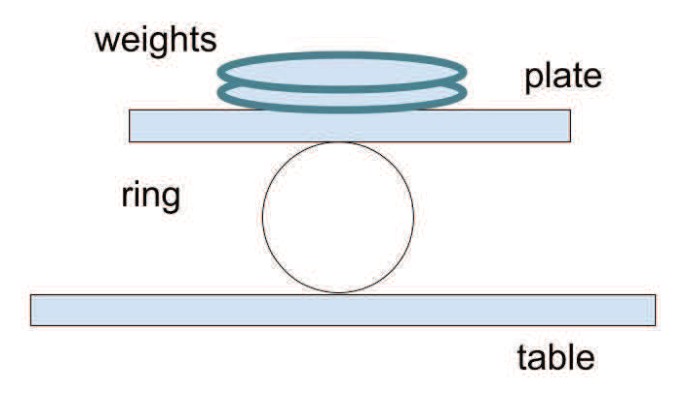
For a book resting on a table, Earth pulls down and the table pushes up. Draw both arrows on the book. Do not put the book’s downward push on the table in the book’s own force diagram; that force acts on the table.
Pause and explain
Why does a force diagram need a named object?
Check your reasoning after answering
Forces acting on different objects cannot be combined to find the net force on one object. Naming the object keeps the interactions and arrows consistent.
Part 2 · Find the net force along a line
Net force is the combined external force on the chosen object. In one dimension, forces in opposite directions subtract. Equal opposite forces give zero net force along that direction. Zero net force means zero acceleration, not necessarily zero velocity. Use direction words with the result.
Read the visual model
Choose the receiver before adding arrows. A sign records direction along the chosen line. Net force is the combined result of the real forces, not an extra push that exists in addition to them.
If the left force becomes 12 N while the right stays 10 N, what is the new net force and direction?
Visual reasoning — after your attempt
10−12 = −2 N with right positive: 2 N left. That predicts leftward acceleration, not necessarily leftward current velocity.
A cart experiences 8 N right and 3 N left, giving 5 N right. If the forces were 8 N each, the net force would be zero; a cart already moving could continue at constant velocity in the ideal model.
Pause and explain
Can balanced forces act on an object that is moving?
Check your reasoning after answering
Yes. With zero net force its velocity does not change. It can remain at rest or continue moving at constant speed in a straight line.
Part 3 · Separate velocity direction from acceleration direction
An unbalanced force changes velocity. If force acts opposite current motion, speed can decrease; if force acts in the same direction, speed can increase. If force changes direction relative to motion, the path can bend. The net-force arrow alone does not specify the object’s current velocity.
Read the visual model
Does a leftward net force prove the cart is already moving left?
Visual reasoning — after your attempt
No. It specifies leftward acceleration. A right-moving cart could be slowing, and a resting cart could begin moving left.
A cart moving right while experiencing a leftward net force initially slows. It does not instantly move left. A motion arrow and a force arrow answer different questions and should have different labels.
Pause and explain
Does a leftward net force prove the cart is already moving left?
Check your reasoning after answering
No. It specifies leftward acceleration. A right-moving cart could be slowing, and a resting cart could begin moving left.
Part 4 · Use evidence to revise an incomplete diagram
If measured velocity changes, a zero-net-force diagram is incomplete or the chosen model has failed. Look for omitted friction, air resistance, or a push that changes over time. A slow or stationary appearance is not sufficient evidence of exact balance; use observations over a measured interval.
Read the visual model
A mismatch can expose a missing force or a method problem. Revise the diagram with a named, testable interaction rather than inventing an unexplained arrow just to make the arithmetic match.
Why is a diagram containing only the 6 N push incomplete for these records? What further measurement could test the revision?
Visual reasoning — after your attempt
It predicts 3 m/s² rather than the supplied 2 m/s². Measure or investigate opposing resistance, while also checking mass and acceleration measurement uncertainty.
A toy car slows after the hand releases it. The hand no longer supplies a forward push, while rolling resistance and air resistance can act against motion. Include these interactions before deciding the first law was contradicted.
Pause and explain
What does slowing motion suggest about a zero-net-force claim?
Check your reasoning after answering
Slowing is a change in velocity, so the zero-net-force claim needs revision. Identify interactions that can provide the nonzero net force.
Apply the whole unit · Explain a braking cart
Illustrative horizontal forces on a cart moving right: pull 6 N right and resistance 10 N left. Vertical support and weight balance. In a second trial, pull and resistance are both 6 N.
Your task
Draw both force diagrams, calculate horizontal net forces, and predict how the rightward velocity initially changes. Explain why neither diagram alone establishes the starting speed.
What your response should show
- Use the supplied observations and measurements accurately; include units where needed.
- Explain the science behind your answer, rather than giving only a number or label.
- Show a labeled model, calculation, or evidence comparison as requested.
- State an assumption or limitation and suggest a useful next measurement.
Response guidance — after your attempt
First trial: net force 4 N left, giving leftward acceleration and initially slowing rightward motion. Second trial: zero horizontal net force, so rightward velocity stays constant in the model. Equal vertical forces give no vertical acceleration. Starting speed requires motion information; it is not determined by force balance alone.
Scientific references and adapted teaching resources
- OpenSciEd 8.1 Contact Forces — public unit overview
- OpenSciEd 8.3 Forces at a Distance — public unit overview
- OpenSciEd instructional model — storyline routines
- Creative Commons Attribution 4.0 — middle-school material license
Parent / teacher teaching notes
Use distinct arrow colors for forces and motion. Ask acting on which object for every arrow. Revisit constant velocity versus rest before adding numerical acceleration. Adaptation credit: OpenSciEd middle-school teaching routines and public task structures by OpenSciEd, CC BY 4.0. This independent version adds original explanatory text, data and figures, terminology support and a home-study schedule. It does not reproduce the complete teacher editions or their classroom validation.
The key idea
Add forces in the same direction, subtract forces in opposite directions; a net force of zero means balanced (no change in motion), otherwise the object accelerates.
Net Force
F net = F₁ + F₂ + …
add forces pointing in the same direction; subtract forces pointing in opposite directions, to find the overall net force.
Worked examples
Example 1
- Forces act in opposite directions, so subtract: 40 − 25 = 15.
- The larger force (40 N) was to the right, so the net force points right.
Example 2 · Worked application
- Choose right as positive.
- Net force=14−9=5 N right.
- A nonzero net force causes acceleration, which changes velocity.
Opposite directions require subtraction, not addition.
Example 3
- Forces act in opposite directions (down vs. up), so subtract: 10 − 10 = 0.
- A net force of zero means the forces are balanced.
Example 4
- Choose right as positive; add 14+(−9)=5 N.
- The acceleration is toward the right, regardless of the cart's initial motion.
Example 5 · Find and fix the mistake
- Test the claim against the stated conditions: Opposite directions require subtraction, not addition.
- Zero net force means no acceleration. An object can continue at constant velocity.
Opposite directions require subtraction, not addition.
Example 6 · Interpret the visual model
- Identify the represented objects, axes, labeled quantities and stated conditions before choosing a rule.
- Choose the receiver before adding arrows. A sign records direction along the chosen line. Net force is the combined result of the real forces, not an extra push that exists in addition to them.
- 10−12 = −2 N with right positive: 2 N left. That predicts leftward acceleration, not necessarily leftward current velocity.
Keep the model’s stated limits explicit: The two horizontal forces on this one cart have a common stated scale. The net is 10−6 = 4 N right, shown as a separate summary. Do not count the net arrow as another interaction, and do not add a partner force acting on a different object. Vertical weight and support are omitted from this horizontal comparison.
Avoid these mistakes
- Zero net force means zero acceleration, not necessarily zero velocity.
Check your understanding
A cart experiences 14 N right and 9 N left. Find net force and describe the change in velocity.
Discuss the answer
5 N right; velocity changes toward the right.
How can an object move while forces on it are balanced?
Discuss the answer
Choose one object and draw only the forces acting on it. Opposite equal arrows give zero net force. The object can then remain still or move in a straight line at constant velocity; balanced forces do not require zero speed. Unbalanced forces change velocity, which can mean changing speed, direction or both. A turn at constant speed still involves acceleration. To predict the change, add forces as directional quantities rather than adding every magnitude as positive.
Return to the phenomenon
A supplied cart moves right steadily while forces are 5 N right and 5 N left. A later interval has 7 N right and 3 N left. Find the horizontal net force in both intervals and explain which interval changes velocity. Distinguish force from motion direction. Revise your first explanation using a named idea from the lesson. Mark the changed part and the evidence that supports it.
Compare explanations after your attempt
The initial net force is zero, consistent with the stated constant velocity. The later net force is 4 N right, causing acceleration to the right for the same cart. Zero net force permits steady motion rather than require rest; a force direction does not by itself give an instantaneous velocity.
What should we investigate next?
Which condition could be changed to test a remaining uncertainty in this explanation? State the predicted observation and what result would challenge your model.
Investigate, explain and revise
Use these tasks after the three teaching sessions as needed. Discuss an attempted explanation before opening response guidance; a matching sentence is less important than a supported mechanism.
Activity 1 · Explain the new evidence case
Use the visible scenario above, Parts 1–4 and your first notebook model. No outside reading or equipment is required.
Your task
A supplied cart moves right steadily while forces are 5 N right and 5 N left. A later interval has 7 N right and 3 N left. Find the horizontal net force in both intervals and explain which interval changes velocity. Distinguish force from motion direction. Write 100–150 words or give a labeled drawing with an equivalent oral explanation.
Success criteria
- Use two relevant stated records or conditions.
- Explain the mechanism rather than only repeat a definition.
- Label observation and inference.
- Name a changed model feature or a remaining uncertainty.
Hint
Read the stated boundary and conditions before selecting a relationship. The unit’s worked examples show intermediate steps.
Response guidance — discuss after your attempt
The initial net force is zero, consistent with the stated constant velocity. The later net force is 4 N right, causing acceleration to the right for the same cart. Zero net force permits steady motion rather than require rest; a force direction does not by itself give an instantaneous velocity.
Activity 2 · Read and extend the figure
Study the new labeled figure and its caption, then compare it with the associated teaching part.
Your task
Could the top cart be moving right? Explain what each important label represents. Add one missing feature that would be needed for a different question, and explain why the original figure leaves it out.
Success criteria
- Answer the figure question with its stated labels.
- Connect the visual representation to the scientific idea.
- Identify a specific limitation from the caption.
- Propose a useful change without misrepresenting supplied evidence.
Hint
Both rows diagram forces on the same chosen receiver, the cart. The first permits rest or constant velocity; the second changes velocity. Vertical forces are omitted for this horizontal comparison. Force arrows describe pushes, not the cart’s distance traveled or its current speed.
Response guidance — discuss after your attempt
Yes, at constant velocity in the stated simple model. Zero net force does not require zero velocity. Both rows diagram forces on the same chosen receiver, the cart. The first permits rest or constant velocity; the second changes velocity. Vertical forces are omitted for this horizontal comparison. Force arrows describe pushes, not the cart’s distance traveled or its current speed.
Words to know
- net force
- The overall force on an object after combining all individual forces, accounting for direction.
- balanced forces
- Forces that combine to a net force of zero, so motion doesn't change.
- unbalanced forces
- Forces that combine to a net force that isn't zero, causing acceleration.
- model
- A representation that explains selected features and makes predictions; it leaves other details out.
- evidence
- Relevant observations or records used to support or challenge a claim.
- system boundary
- The chosen limit separating the objects being studied from their surroundings.
- assumption
- A condition taken as true for a model or calculation and needing to be checked against the case.
When forces don't line up: combining forces at an angle
Adding forces is easy when they point along the same line — just add or subtract. But when two forces act at a right angle to each other, like a boat's engine pushing it forward while a current pushes it sideways, you combine them using the same Pythagorean theorem (a² + b² = c²) you use in geometry. A 3 N push east and a 4 N push north combine into a single net force of √(3² + 4²) = √25 = 5 N, angled diagonally between the two — physics and math turning out to be exactly the same tool.
Terminal velocity: when a falling object's forces finally balance
A skydiver jumping from a plane doesn't just keep speeding up forever — as speed increases, air resistance (drag) pushing upward grows stronger too, until it exactly equals the pull of gravity. At that point, net force becomes zero, and the skydiver falls at a constant, unchanging speed called terminal velocity — for a human in a typical belly-down position, that's about 195 km/h (54 m/s). It's a perfect real-world example of balanced forces: even though the skydiver is very much still moving, their forces are balanced and their velocity stops changing.
Cruising at 35,000 feet: an airplane in perfectly balanced flight
It's tempting to think that if an airplane's engines are running, it must be accelerating — but a plane cruising at a constant altitude and constant speed has perfectly balanced forces acting on it: lift balances weight (up vs. down), and engine thrust balances air drag (forward vs. backward). The engines work constantly not to speed the plane up, but simply to keep matching the drag trying to slow it down. This is the same principle as a car maintaining a steady highway speed — the engine isn't 'winning' against friction, just fighting it to a draw.
Free-body diagrams: the engineer's trick for tracking every force
When several forces act on an object at once, physicists and engineers draw a free-body diagram: a simplified sketch of just the object, with an arrow for every force acting on it, sized to show relative strength and pointed in the right direction. Bridge engineers use exactly this technique to make sure the combined forces of traffic, wind, and the bridge's own weight stay balanced by the strength of its cables and supports — an unbalanced design isn't just a physics homework mistake, it's a structure that could actually fail.
In the real world
Tug-of-war is a great example of unbalanced forces — the moment one side pulls harder, the rope and both teams accelerate that way.
Exit check
Could the top cart be moving right? Explain the relevant mechanism and one model limitation.
Check your explanation after answering
Yes, at constant velocity in the stated simple model. Zero net force does not require zero velocity. Both rows diagram forces on the same chosen receiver, the cart. The first permits rest or constant velocity; the second changes velocity. Vertical forces are omitted for this horizontal comparison. Force arrows describe pushes, not the cart’s distance traveled or its current speed.
Explain your reasoning without notes. If a key idea is missing, revisit the lesson and try again.